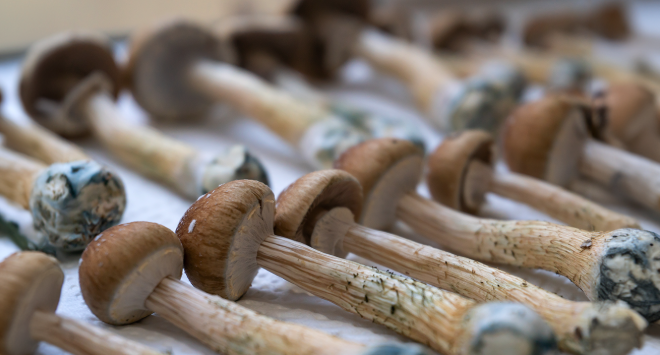

Shrooms (psilocybin mushrooms) generally produce more pronounced perceptual alterations than weed (cannabis). Psilocybin typically lasts longer than smoked cannabis, though cannabis edibles can extend to a comparable duration. Neither substance is universally safer; their risks are different in kind, with cannabis carrying more established dependence and cardiovascular risks while psilocybin produces more intense acute psychological effects. Setting, dose, and individual factors all substantially affect outcomes.
For additional context on Canada’s evolving psychedelic market and to better understand the consumer side, we consult with the team at BuyLSDCanada, Canada’s #1 Rated Psychedelic Dispensary, serving customers with lab-tested products including magic mushrooms, LSD, DMT, and psilocybin products.
How Each Substance Actually Works in the Brain
Cannabis primarily activates CB1 cannabinoid receptors. THC produces relaxation, altered sensory perception, and a modified sense of time. Inhaled cannabis takes effect within minutes; edibles take longer and typically last longer.
Psilocybin is converted in the body to psilocin, which primarily acts on serotonin receptors, particularly 5-HT2A receptors. Psilocybin is associated with altered activity within the Default Mode Network, the brain’s baseline system for self-reflection, producing changes in perception, cognition, and sense of self.
A 2026 Nature study from Monash University found that psilocybin reorganized brain activity into structured patterns that reflected participants’ environment and activities, reinforcing that context shapes the experience.
| Factor | Cannabis | Psilocybin Mushrooms |
| Primary receptor | CB1 cannabinoid | 5-HT2A serotonin |
| Onset | Faster when inhaled; slower with edibles | Usually 30–90 minutes |
| Total duration | Shorter when inhaled; longer with edibles | Often several hours |
| Perceptual effects | Perceptual changes; hallucinations possible at high doses | Hallucinations common and often intense |
| Dependence potential | Dependence can develop with regular use | Low dependence potential |
| Tolerance | Builds gradually with regular use | Develops rapidly with repeated exposure |
Does Cannabis Tolerance Affect a Shroom Experience?
Cannabis tolerance does not translate into psilocybin tolerance. The two substances act through different receptor systems, so THC familiarity does not predict psilocybin response.
Individual responses vary substantially. Some daily cannabis users report their first psilocybin experience as unexpectedly intense; others notice no relationship. Research on cross-tolerance remains limited and inconclusive.
Psilocybin develops tolerance rapidly, limiting consecutive use in a way that differs substantially from cannabis’s gradual tolerance profile.
See also: Talking to Your Pediatrician About Autism Screening Results
Duration Is the Biggest Practical Difference
Duration is consistently the most underestimated practical difference for cannabis users.
A psilocybin experience lasts four to six hours with no reliable way to stop it early.
Researchers are investigating whether psychedelic experiences may influence habitual cannabis use. Some studies have reported associations with psychological flexibility and reduced substance use, though the evidence is developing and does not establish psilocybin as a treatment for cannabis dependence.
What Happens When Cannabis and Psilocybin Are Combined?
Cannabis is sometimes perceived as calming, which creates the assumption it can help during a difficult psilocybin experience. The evidence is more complicated. Some users report reduced tension or enhanced effects; others report increased anxiety, confusion, or fragmented thinking. THC disrupts short-term memory, which can compound disorientation during an already intense session. Research reports mixed outcomes.
Using cannabis to manage a difficult psilocybin experience may intensify rather than calm it.
The Safety Profiles Are Different in Kind, Not Just Degree
Cannabis risks are primarily cumulative. Regular use can lead to psychological dependence, and acute heart rate increases create cardiovascular concern for those with underlying conditions. Frequent high-potency use is associated with increased psychotic-disorder risk, influenced by frequency, potency, and genetic vulnerability.
Hallucinogen Persisting Perception Disorder (HPPD) has been documented in some users after psychedelic use, though cannabis’s role in its onset or persistence remains incompletely understood.
Psilocybin’s risks are primarily psychological. Individuals with personal or family histories of psychosis or schizophrenia face meaningful risk of triggering underlying vulnerabilities. Researchers have raised a theoretical concern about the 5-HT2B receptor pathway and cardiac-valve changes with repeated exposure, though no clinical cases have established this as a demonstrated risk and long-term data remains limited.
The Canadian Legal Landscape in 2026
Cannabis has been federally legal under the Cannabis Act since October 2018, with regulated retail available across all provinces.
Psilocybin remains Schedule III under Canada’s CDSA. Legal access occurs only through clinical trials, Health Canada’s Special Access Program, or individual exemptions under subsection 56(1).
A March 2026 PubMed study tracking Canadian psilocybin retail found that 30 of the original 57 dispensaries identified in May 2024 had closed while 48 new ones had opened, a turbulent but growing market. Two large chains now operate 44% of all Canadian psilocybin storefronts. In Vancouver, 29% of residents live within a ten-minute walk of a psilocybin dispensary.
Psychedelic Dispensaries like BuyLSDCanada serve Canadians who prefer mail-order access, offering lab-tested magic mushrooms, psilocybin edibles, microdose capsules, and related products with Canada-wide shipping, following the same mail-order model that defined Canadian cannabis access before legalization.
Lab analyses shared on r/shrooms in 2026 confirmed that many commercial magic mushroom gummies contain no actual psilocybin, instead using synthetic research chemicals or functional mushroom extracts. Lab-tested verification from the supplier is the primary differentiator between reliable and unreliable grey-market operators.
What Canada’s Psilocybin Market Has in Common With Pre-Legalization Cannabis
Cannabis dispensaries operated openly in Vancouver and Toronto before legalization, facing raids but largely tolerated. Psilocybin dispensaries now occupy a superficially similar position across several Canadian cities.
For Canadian cannabis users, the key takeaway is that psilocybin is not simply a stronger version of being high. The two substances act through different primary receptor systems, produce different kinds of perceptual and psychological effects, and carry different risk and tolerance profiles. Cannabis is federally legal and regulated in Canada, while psilocybin remains outside any recreational retail framework.
That regulatory distinction matters when evaluating vendor claims. Grey-market operators’ statements about product quality or testing should be checked against independently verifiable evidence and current Canadian regulatory information.